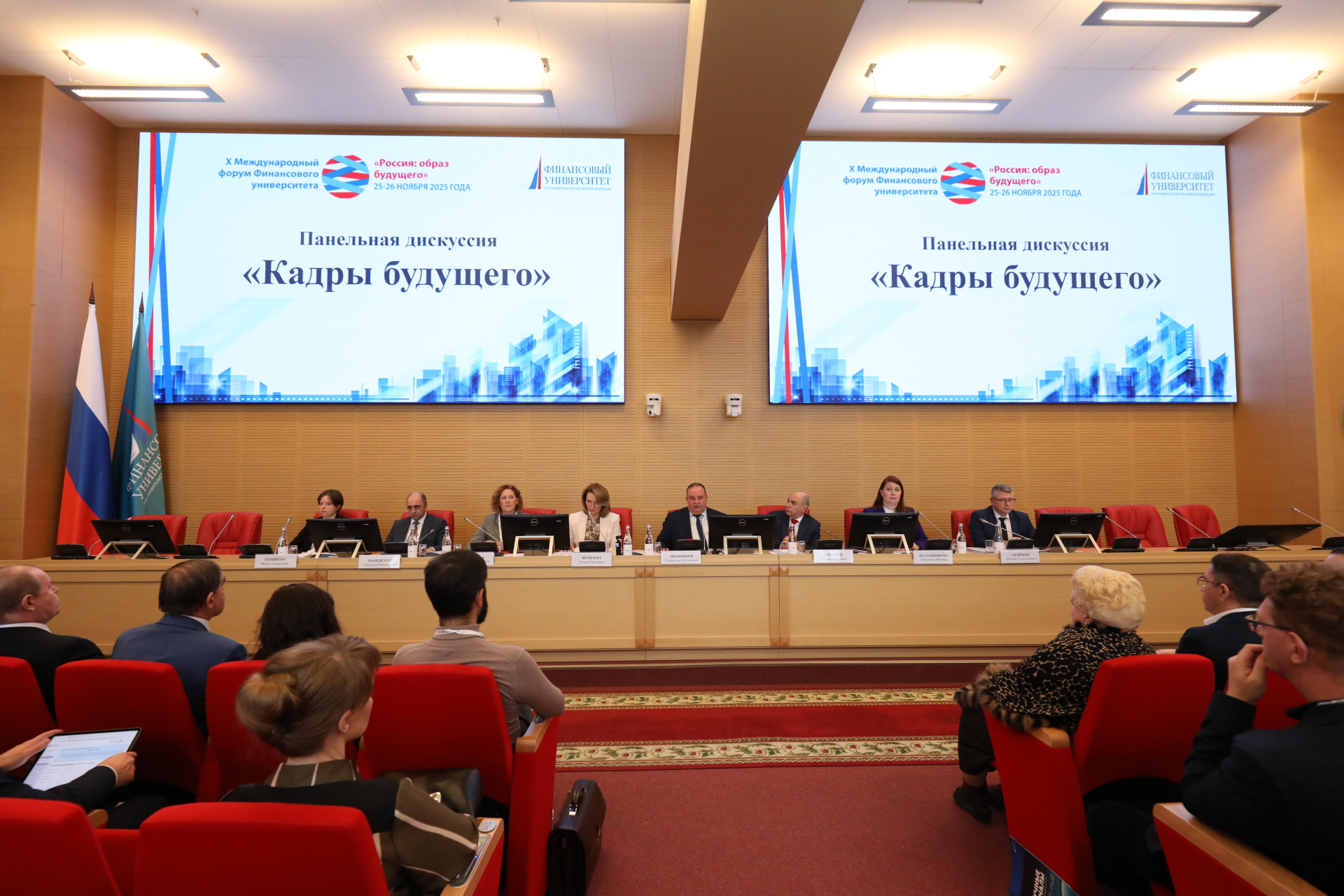
On November 25, 2025, as part of the X International Financial University Forum"Russia: A Concept of the Future," a panel discussion titled "The Future Workforce" focused on the interaction between the education system and the real economy. Experts discussed effective models for training young professionals, the content of modern educational programs to support Russia’s new economy, and mechanisms for integrating the labor market with educational institutions.
The discussion was opened by the moderator, Ekaterina Kameneva, Vice-Rector for Academic Affairs at the Financial University. She emphasized the growing importance of human capital as a key factor in the country’s development in today’s conditions.
Stanislav Prokofiev, Rector of the Financial University, highlighted current trends in workforce training: “Today, university education must be not only fundamental but also practice-oriented. The era of single-specialty specialists is behind us, so we are designing programs that enable graduates to earn double degrees on their diploma. Developing skills through assessment systems and additional education programs is now a crucial element.”
Elena Yakovleva, Deputy Minister of Finance of Russia, noted the increasing demand for professionals with two or more degrees to successfully drive digital transformation in government. She stressed the importance of a seamless educational trajectory, where students progress from learning through practice to continuous employment, calling this approach a key driver for building Russia’s human capital.
Valentina Shalashnikova, Director of the Department of Civil Service and Administrative Activities at the Ministry of Science and Higher Education, presented the goals and features of the "Internship Program" by the Ministry. She emphasized the systemic importance of such initiatives for developing a young talent reserve.
Alexander Machevskiy, Executive Director of the "DOM" Block at VEB.RF, shared a systemic approach to workforce training based on intensive six-month internships with mentorship. He highlighted the importance of legislatively formalizing intern status and creating a unified resource for internship information. He also stressed the need to develop practical skills through "intern-sharing" and soft skills development.
The topic of AI was addressed by Mikhail Alekseev, Chairman of the Board of PJSC "Post Bank." He highlighted the critical role of AI tools for professional competitiveness and emphasized the importance of practical training in AI within educational programs, combined with the development of critical thinking and ethical standards for the use of new technologies.
Dmitry Semenov, Vice-Rector for Strategy and GR at the Financial University, presented a comprehensive approach to collaboration with employers aimed at achieving 95% employment of graduates by 2030. This strategy is based on implementing an educational model that combines two degrees in one diploma, creating a project exchange platform, utilizing VR technologies in the learning process, and ensuring mandatory IT training across all programs.
Representing the perspective of the younger generation, second-year master's student at the Financial Faculty, Maria Khomyakova, highlighted the importance of personalized learning, developing soft skills, and the ability to think beyond a single discipline. She emphasized that these qualities enable graduates to succeed even when changing professional fields.
More photos from the panel discussion can be viewed via the link.